
5 Finish Carpentry Upgrades That Make a New Build Feel Custom
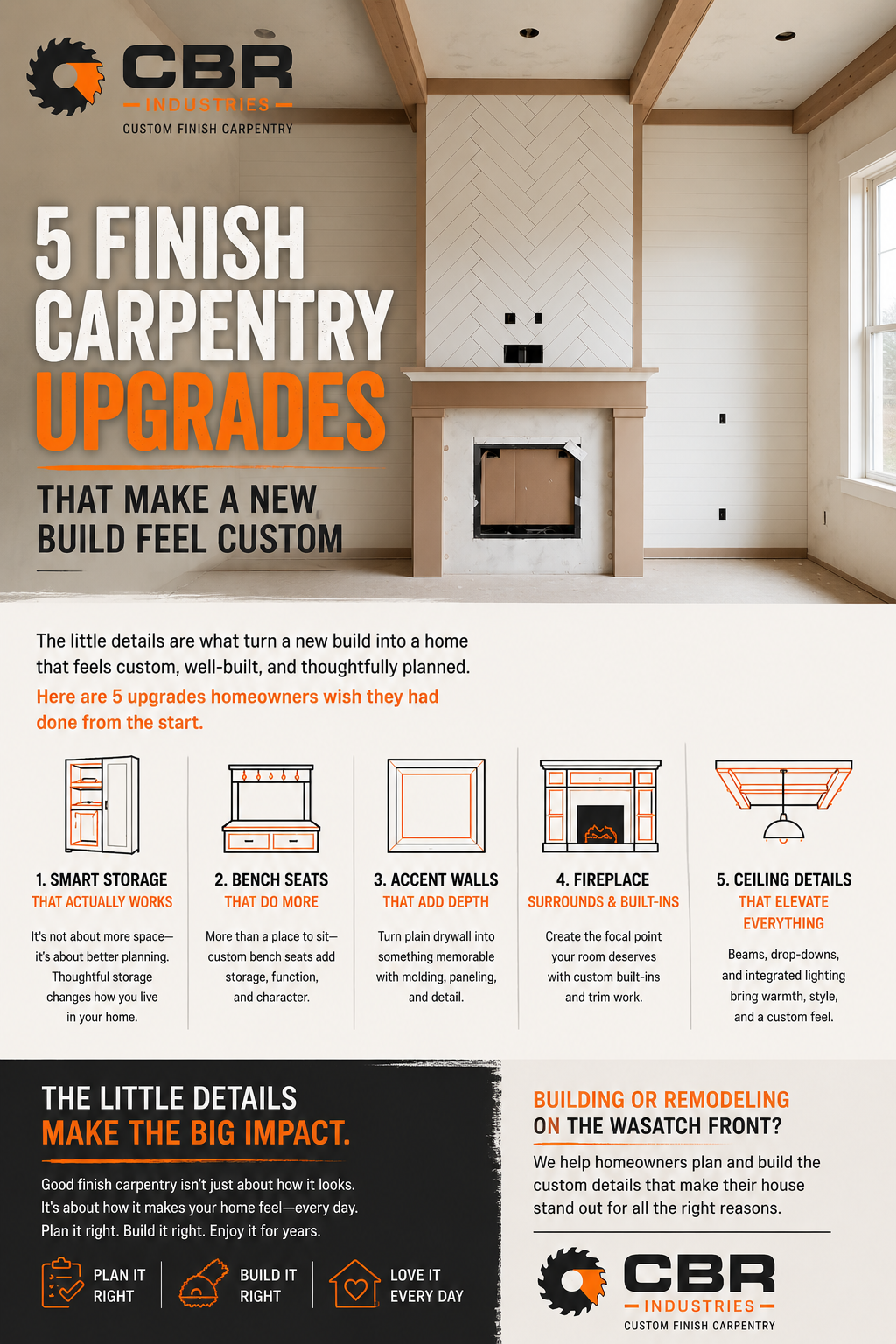
After years of working in custom homes, these are the upgrades homeowners tell me they wish they had planned from the beginning.
Everybody gets excited during a new build.
They're choosing flooring, countertops, cabinet colors, paint, and fixtures. By the time the house is finished, they're exhausted and just happy to get the keys.
Then six months later, the conversations begin.
"I wish we had more storage."
"I wish this wall had something on it."
"I wish we would have planned the fireplace differently."
"I wish we would have done built-ins."
Ironically, I almost never hear someone tell me they wish they had spent another $5,000 on appliances. Instead, homeowners almost always wish they had spent more time thinking about the finish details that make a house feel unique.
I've worked in custom homes across the Wasatch Front for years, and if I were building my own house today, these are the five upgrades I'd spend money on before chasing the latest trends.
1. Stop Calling It "Storage"
Instead, ask yourself:
What is actually going to live here?
There's a huge difference.
Many floor plans simply label a room or closet as "storage." That's where the planning ends.
Some homeowners are perfectly happy hanging a few hooks and stacking boxes on the floor.
Others need space for backpacks, sports equipment, dog leashes, coats, charging stations, cleaning supplies, blankets, or seasonal decorations.
Storage isn't always about having more square footage.
It's about designing smarter square footage.
The homes that feel expensive usually aren't bigger.
They're simply better organized.
Custom shelving, lockers, drawers, cabinets, and built-ins can completely change how a family uses a space while making the room itself look intentional instead of unfinished.
One of the biggest regrets I hear from homeowners isn't that they didn't have enough storage.
It's that they didn't spend enough time planning the storage they already had.
2. A Bench Seat Can Become the Centerpiece of a Room
Builders often offer a bench seat upgrade.
There's nothing wrong with that.
But many end up looking like a simple plywood box attached to a wall.
A custom bench seat becomes furniture.
Add panel molding.
Add cubbies.
Add drawers.
Add cabinetry.
Add decorative backing.
Now you've created something that provides storage while becoming one of the first things guests notice when they walk into your home.
If someone asked me how to get the biggest visual impact for around $5,000, I'd seriously consider combining a custom bench seat with an accent wall.
You gain organization, seating, and character all in one project.
That's money well spent.
3. Empty Walls Are Missed Opportunities
Some people think accent walls are just trends.
I disagree.
Wood has an incredible ability to change how a room feels when it's used correctly.
The problem isn't accent walls.
The problem is putting them in the wrong place or installing them poorly.
Quality craftsmanship shows.
Experience shows even more.
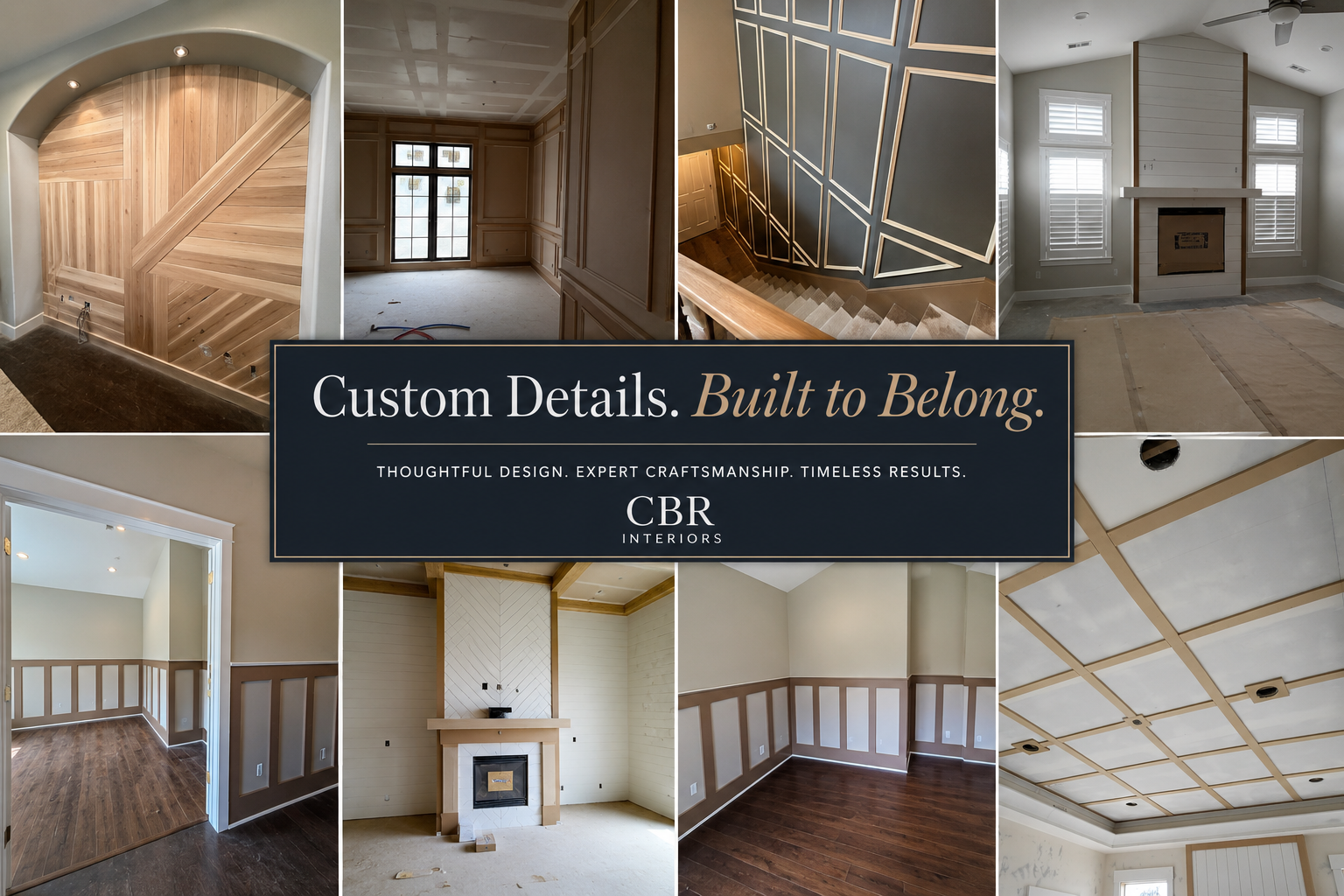
Picture frame molding, panel molding, wainscoting, or decorative trim can transform a plain hallway into one of the most memorable spaces in the home.
Instead of another stretch of drywall, the room gains depth, shadows, texture, and personality.
I've had homeowners tell me afterward that one decorative wall changed the entire feel of their house.
The best part?
It's much easier to build during construction than after furniture, paint, and everyday life have moved in.
Any renovation requiring demolition adds another layer to the invoice.
Dust, scheduling, repairs, and return trips all cost money.
Doing it right the first time almost always saves money.
4. Your Fireplace Should Feel Custom, Not Builder Grade
Builders often install a basic mantel and move on.
It's functional.
But functional doesn't always become memorable.
One of my favorite projects involved adding bookcases to both sides of a fireplace where there was unused space.
We installed floating shelves nearly to the vaulted ceiling and face-framed both sides with an arched top.
The homeowner later painted everything a deep forest green.
The transformation was incredible.
The fireplace no longer sat in the room.
It became the room.
Sometimes clients already have great ideas. When those ideas are combined with a solid plan and quality craftsmanship, the results can exceed everyone's expectations.
Another project involved large jamb openings and a layered four-piece header inspired by a photo the homeowner found online.
The framing crew had done excellent work, which made achieving perfect lines much easier.
When we finished, the homeowner told us the result was "better than I could have asked for."
As carpenters, comments like that become badges of honor.
5. If You Have More Budget, Look Up
If someone gave me another $15,000 to improve a home, I'd be looking at the ceiling.
Drop-down details.
Decorative beam work.
Architectural ceiling features.
They change how an entire room feels without taking away any usable floor space.
If the budget grew closer to $30,000, I'd integrate lighting into those beams so the ceiling itself becomes part of the design instead of simply holding light fixtures.
Most people decorate walls.
Very few think about ceilings.
That's exactly why they make such a statement.
The Biggest Mistake I See
People often ask what adds value to a home.
My answer is simple.
If an addition makes your life easier and is built with quality, it adds value.
Character adds value.
Function adds value.
Craftsmanship adds value.
Whether you're thinking like a homeowner or a real estate professional, it's always nice to walk through a house and have features you're proud to point out.
Unfortunately, many homeowners wait until after construction is complete.
Then demolition begins.
Then dust.
Then scheduling conflicts.
Then material delays.
Then another invoice.
The more you can complete during the messy stage of construction, the better.
Even with extensive dust protection, renovations are still renovations.
Communication and planning are the best ways to minimize unexpected costs.
What I Would Tell Anyone Building a Home
If I were building my own house today, I would absolutely spend money on quality finish carpentry.
I wouldn't waste a dollar on poor quality.
Good finish work isn't flashy.
It's consistency.
It's perfect reveals around doors.
It's straight lines.
It's symmetry.
It's details that most people don't consciously notice but immediately feel when they walk into a room.
As a finish carpenter, one of the first things I notice in a home is the reveal around the door casing. Some are perfectly even. Others are mismatched or so tight that the painter can't properly caulk them, leaving imperfections that stand out forever.
Quality shows.
Experience shows even more.
The biggest advice I can give anyone building or renovating is this:
Take your time. Make a plan. Then be ready to adjust that plan when necessary.
The most expensive mistakes I've seen weren't caused by buying better materials.
They happened because someone had to build it twice.
If you're building or remodeling anywhere along the Wasatch Front, think about the finish details before the house is finished. Those "extras" aren't really extras at all.
They're what make a new build feel like a custom home.


A door that rubs, squeaks, swings on its own, or will not latch is usually telling you something. This post breaks down the common causes, from loose hinges and swollen doors to shifted jambs, bad reveals, and house movement, so you know when it is a simple fix and when it is time to call a carpenter.