Why Won’t My Door Close All the Way?
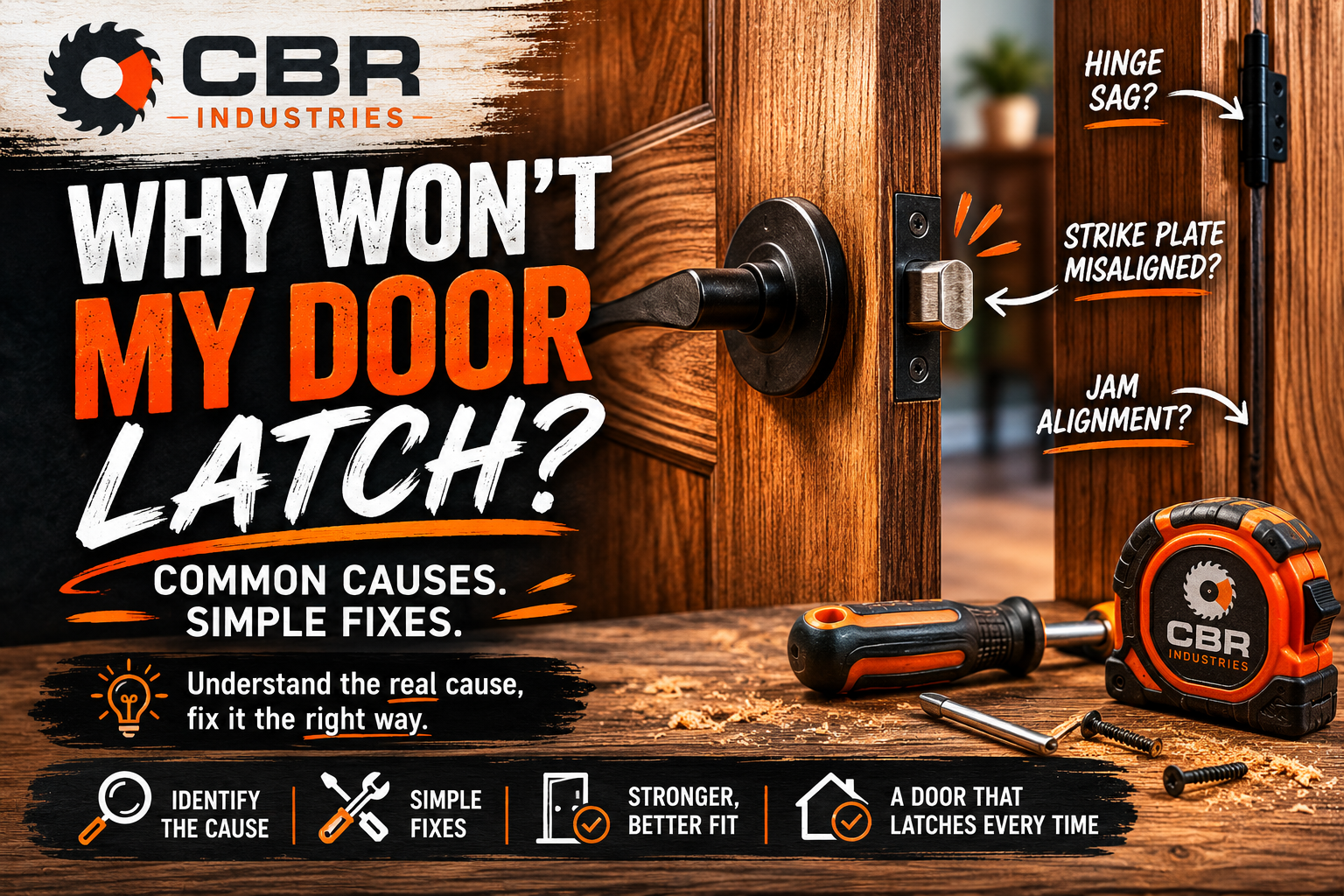
A door that won’t close all the way can drive you crazy.
Maybe it rubs at the top. Maybe it hits the jamb. Maybe it almost latches, but not quite. Maybe you have to lift the handle, shove it with your shoulder, or give it that special “household trick” just to get it shut.
That is not how a door should work!
Most people look at that and assume the door itself is the problem.
Sometimes it is. A lot of the time, it is not.
A door is part of a system. You have the slab, hinges, jamb, casing, framing, floor, hardware, and the house itself. If one of those pieces is off, the door starts telling on it.
That is why I do not like guessing on doors. You can tighten screws, move strike plates, sand edges, or shave the slab, but if you do not know what caused the problem, you might only be hiding it for a little while.
Around the Salt Lake Valley, I have seen this in older homes, newer builds, basements, remodels, and track homes. Dry air, settling, framing issues, flooring changes, and rushed installs can all show up in the way a door works.
A good carpenter is not just trying to make the door close once. The goal is to make it close right, latch right, look right, and keep working.
What should you check first when a door will not close?
The first thing I look at is the reveal.
The reveal is the gap around the door between the door slab and the jamb. To a homeowner, it might just look like a gap. To a carpenter, it tells the story.
If the reveal is tight at the top corner on the latch side, the door may be sagging. If the gap is wide at the top and tight at the bottom, the jamb may be out. If the hinge side looks uneven, something may have moved or been installed wrong.
A good door should have a clean, even-looking reveal. It does not need to be perfect enough for someone to measure with a microscope, but it should look intentional. The gap should make sense all the way around.
If the reveal is bad, I do not start by cutting the door. I want to know why the reveal changed.
That is where a lot of bad fixes start. Someone sees a rub mark, grabs a sander, and starts removing material before they know what moved. That can turn a simple adjustment into a permanent ugly gap.
Could it just be loose hinge screws?
Yes, and sometimes that is the easy win.
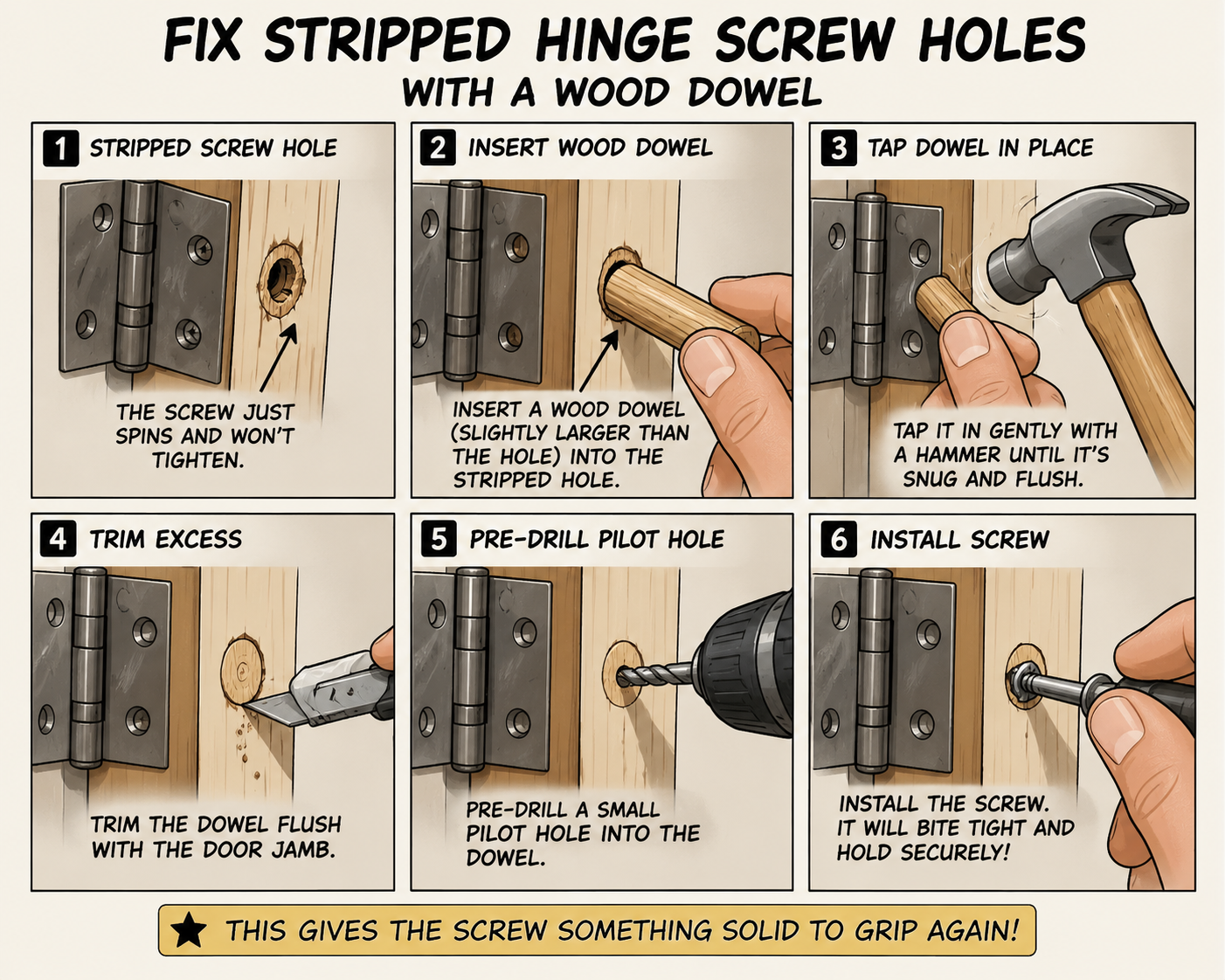
If the hinge screws loosen up or strip out, the door can sag. Even a small amount of movement at the hinge can make the latch side drop enough to rub, hit the frame, or miss the strike plate.
One thing a homeowner can check is whether the hinge is pulling away from the jamb. Open the door and look closely at the hinge side. If the screws are loose or the hinge plate is moving, that is a clue.
Sometimes tightening the screws works. Sometimes the screw holes are stripped and the screws just spin. In that case, you have 2 options, you can add a wooden dowel and hammer that in to the stripped hole or longer screws into the framing can help pull the hinge side back where it belongs.
But even that needs to be done carefully.
If you over-tighten screws, you can pull the jamb out of shape. Then you fixed one problem and created another one. I have seen that more than once.
That is why I always watch the reveal while making adjustments. The door tells you if the fix is working.
What does a sagging door usually look like?
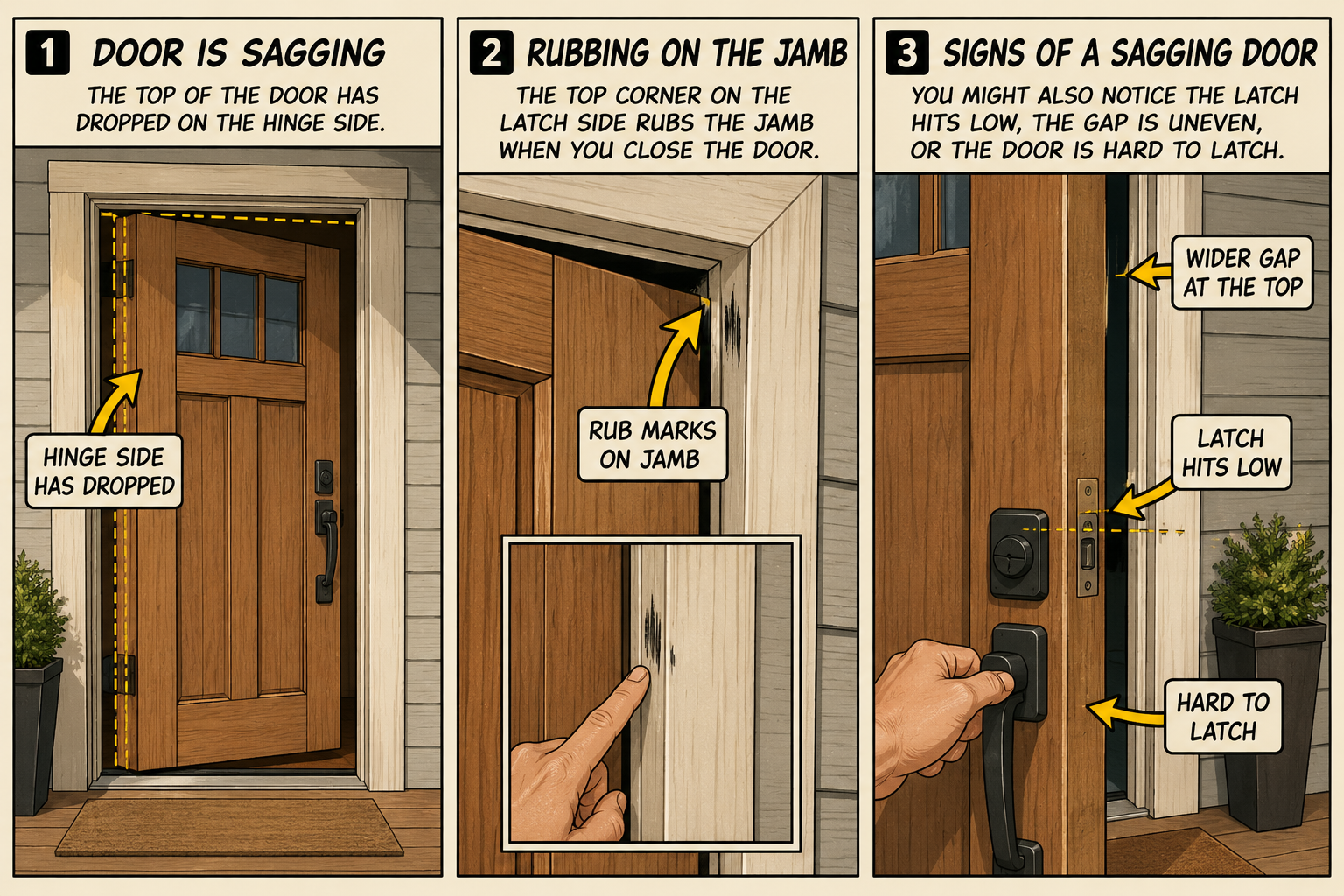
A sagging door usually shows up on the latch side.
You might see the top corner rubbing. You might have to lift the handle to get it to latch. The strike plate might look like it is too high or too low. The door might feel heavy when you close it.
A lot of people jump straight to moving the strike plate when this happens. Sometimes that works, but it can also be a shortcut.
If the door has sagged, the strike plate is not the real problem. The door position is. Moving the strike plate might get it to latch, but the door is still hanging wrong.
That kind of fix might get you through the week, but it does not mean the door was fixed correctly.
What if the door almost closes but will not latch?
If the door closes but will not latch, I look at the latch and strike plate, but I do not stop there.
The latch may be hitting above the hole, below the hole, or off to one side. That tells you which direction the door has moved.
If the door used to latch and now it does not, something changed. Maybe the hinges loosened. Maybe the jamb shifted. Maybe the house settled. Maybe the door swelled. Maybe the door was never hung correctly and finally started showing it.
Moving the strike plate can be the right call if everything else looks good and the adjustment is small. But if the door has bad reveals, rub marks, or ghost swing, moving the strike plate is usually not enough.
The cleaner fix is to get the door sitting right first, then adjust the hardware if needed.
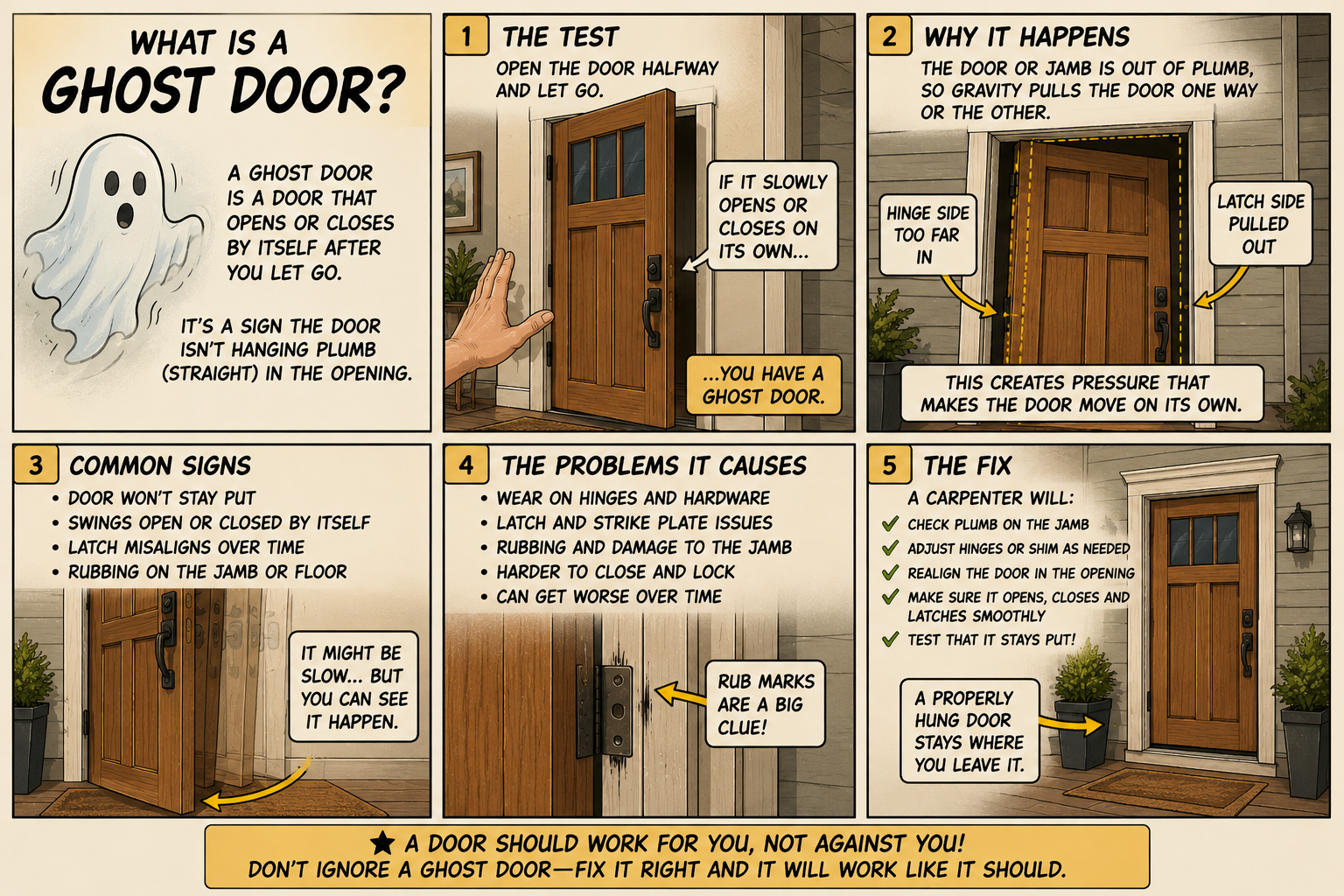
What is ghost swing?
Ghost swing is when a door opens or closes by itself after you let go.
To me, that matters.
A door should stay where you put it. If it slowly swings open or slowly swings closed, something is usually out of plumb. It might still latch. It might still look okay to someone walking by. But the door is telling you it is not sitting right.
I have had situations where someone wanted doors hung with the framing, even when the framing was not right. That is where I draw the line.
Bad framing does not mean the door should work badly.
A finished door should open clean, close clean, latch clean, have good reveals, and stay where you leave it. That is the standard I care about.
*Caution* Not for every situation:
If you pull one or two of your hinge pins out and give them a little tap with a hammer, it will create more friction in that hinge and ultimately will slow that swing down. Creating binding in hinges is never the correct way.
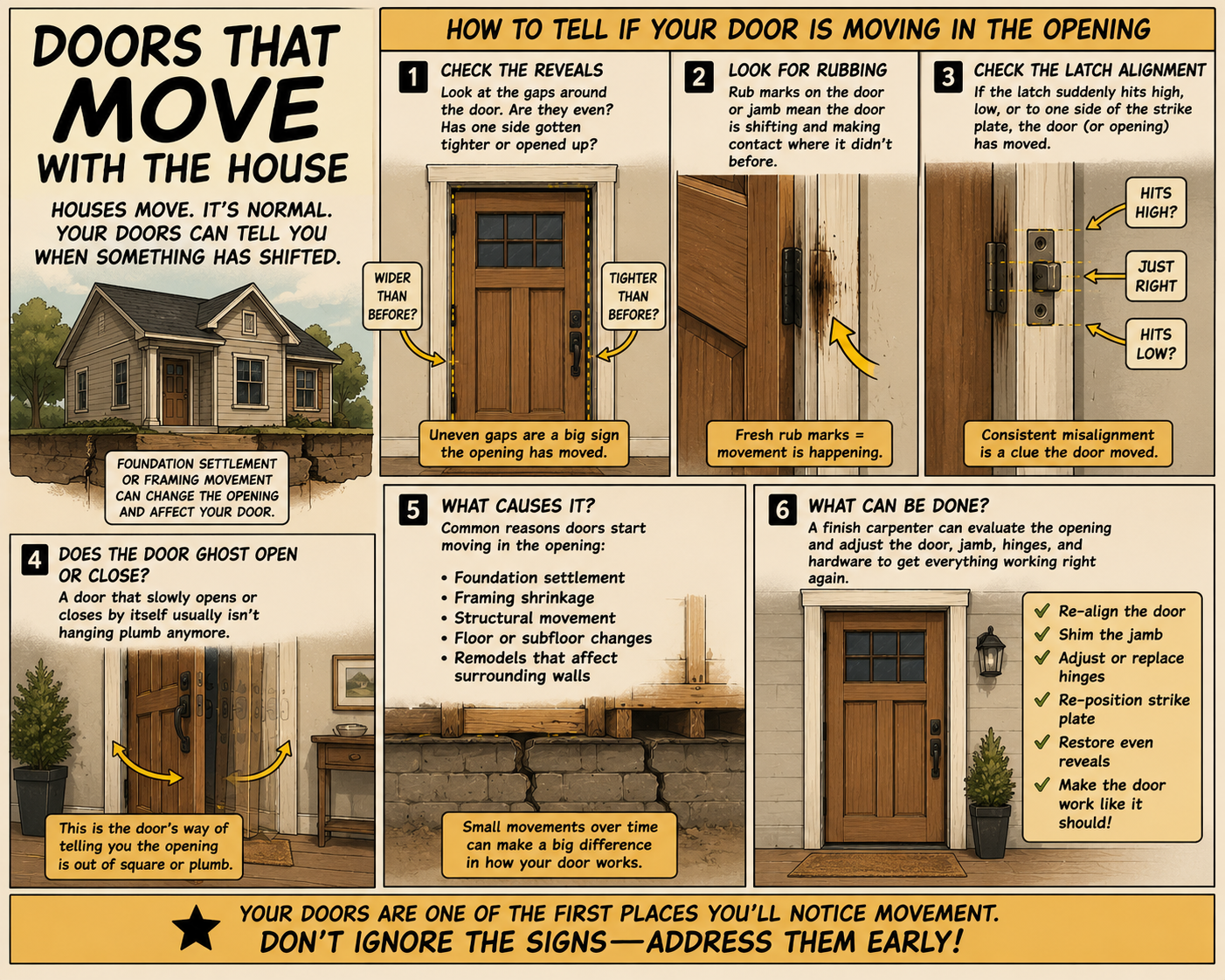
Can house settling cause doors to stop closing?
Yes. Absolutely.
Homes move. Framing dries out. Floors settle. Basements shift. Remodels change things. None of that automatically means something is falling apart, but movement shows up around doors fast because the gaps are small.
In the Salt Lake Valley, we have a lot of different conditions depending on the home. Some older homes have settled over time. Some newer homes still move as materials dry out. Some basements are framed and finished after the house has already done some moving. Some remodels tie new work into old framing that was never straight to begin with.
A door is one of the first places you notice those issues.
If a door works fine part of the year and acts up another part of the year, that is useful information. It may be seasonal movement, humidity, swelling, or the house shifting slightly with temperature changes.
That does not mean you should immediately shave the door down. You need to know if the door is actually too big or if the opening is moving.
Can a door swell?
Yes, a door can swell.
This is more common with wood doors, bathroom doors, exterior doors, or doors that were not sealed well. You might see rubbing on one edge, paint cracking, or a door that feels tighter during certain weather.
But not every rubbing door is swollen.
A lot of people assume the slab got bigger because that is the part they touch. But the jamb may have moved. The hinge side may have sagged. The framing may be pushing the opening out of square.
Before cutting or sanding a door, I want to know what is actually happening.
If the door is swollen, trimming or planing can be the right fix. If the jamb is the issue, cutting the door is not solving the real problem.
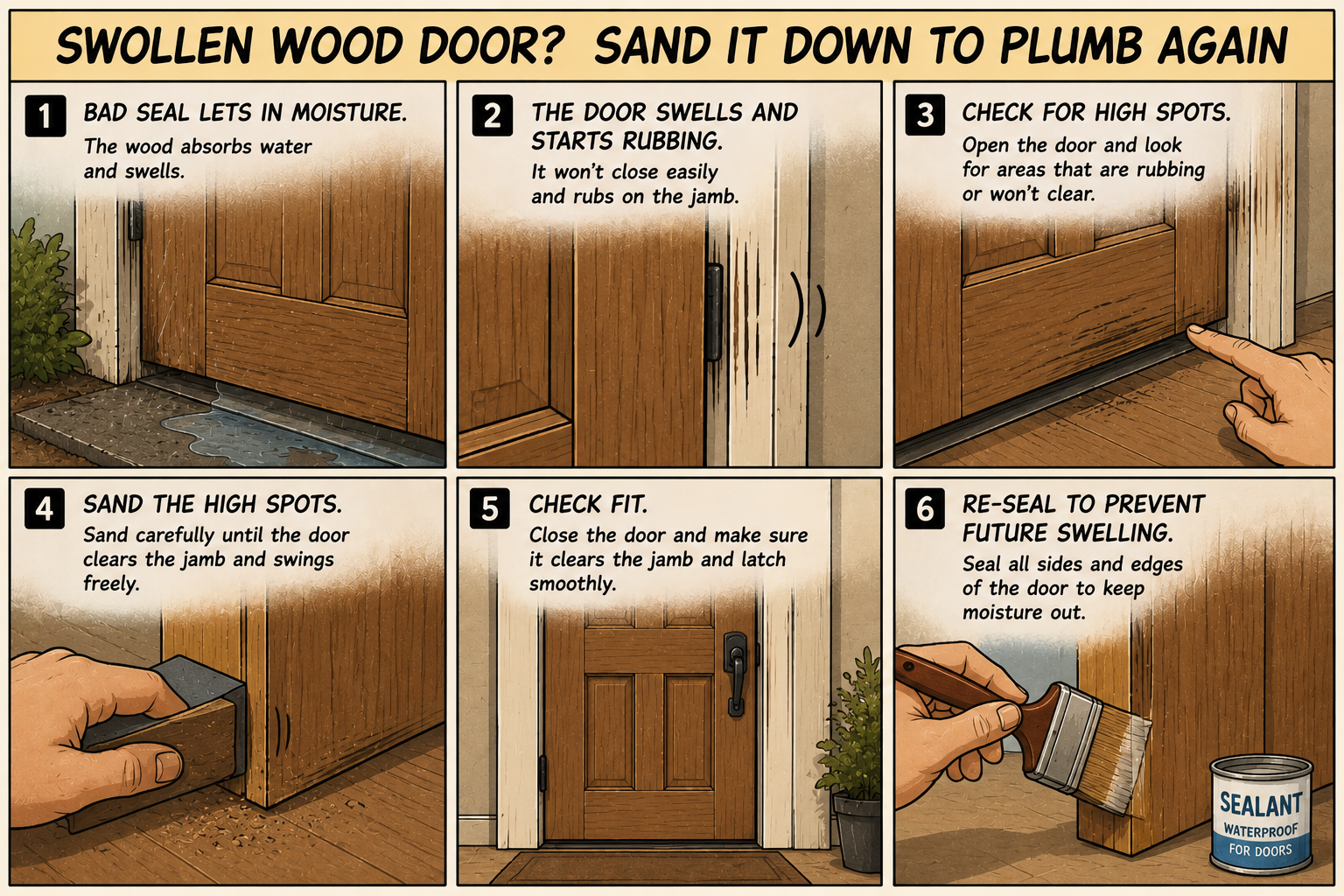
Should you sand or shave the door?
Sometimes, but it should not be the first move every time.
Sanding or shaving a door makes sense when the slab is truly too tight, swollen, or needs a small adjustment. It can also make sense after flooring changes if the door does not have proper clearance.
But cutting a door because it rubs, without checking the hinges and jamb first, is risky.
If the door is sagging and you cut the top corner, then later the hinge gets fixed, now the door may have an ugly gap. If the jamb is crooked and you cut the slab to match it, the door might close, but the finished product still looks wrong.
Once you cut material off a door, you do not get it back.
That is why I would rather diagnose the problem first than start removing material right away.
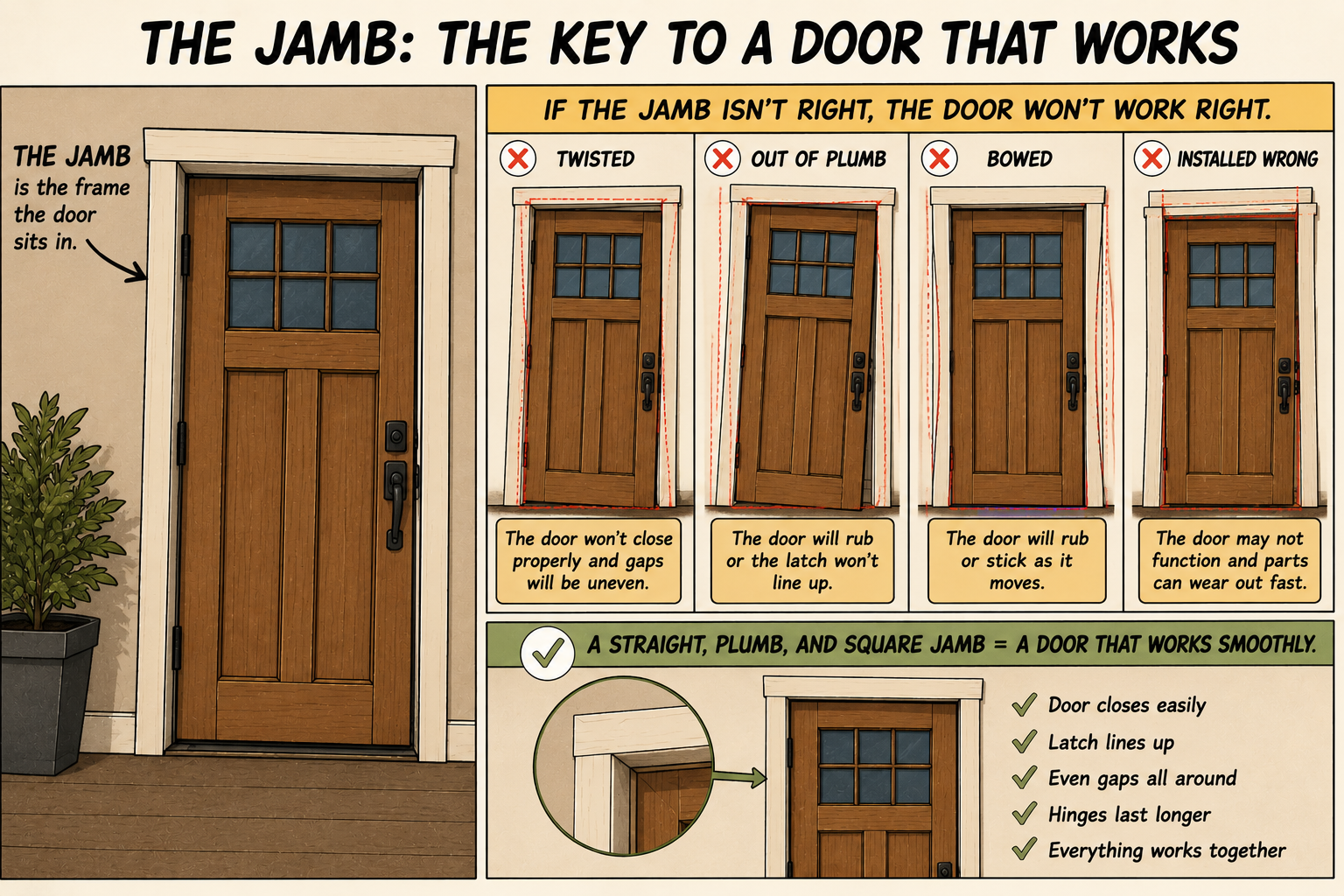
What does the jamb have to do with it?
The jamb has everything to do with it.
The jamb is the frame the door sits in. If the jamb is twisted, out of plumb, bowed, or installed wrong, the door is going to fight you.
A door slab can be perfectly fine and still not close because the jamb is wrong.
This is where finish carpentry matters. Casing can hide a lot. Paint can hide a lot. But if the jamb is wrong, the door will still tell on it every time you use it.
I do not care how good the casing looks if the door does not operate right.
Good finish work is not just making something look finished. It has to function too.
What about casing hiding bad work?
Casing is supposed to finish the opening, not cover up a bad install.
I have seen doors where the trim looked decent at first glance, but the door rubbed, swung by itself, or would not latch cleanly. That usually means someone focused more on making the outside look acceptable than making the door system right.
That is backwards.
The jamb needs to be right. The door needs to work. The reveal needs to look clean. Then the casing finishes it off.
If you use casing to hide the problem, the problem is still there.
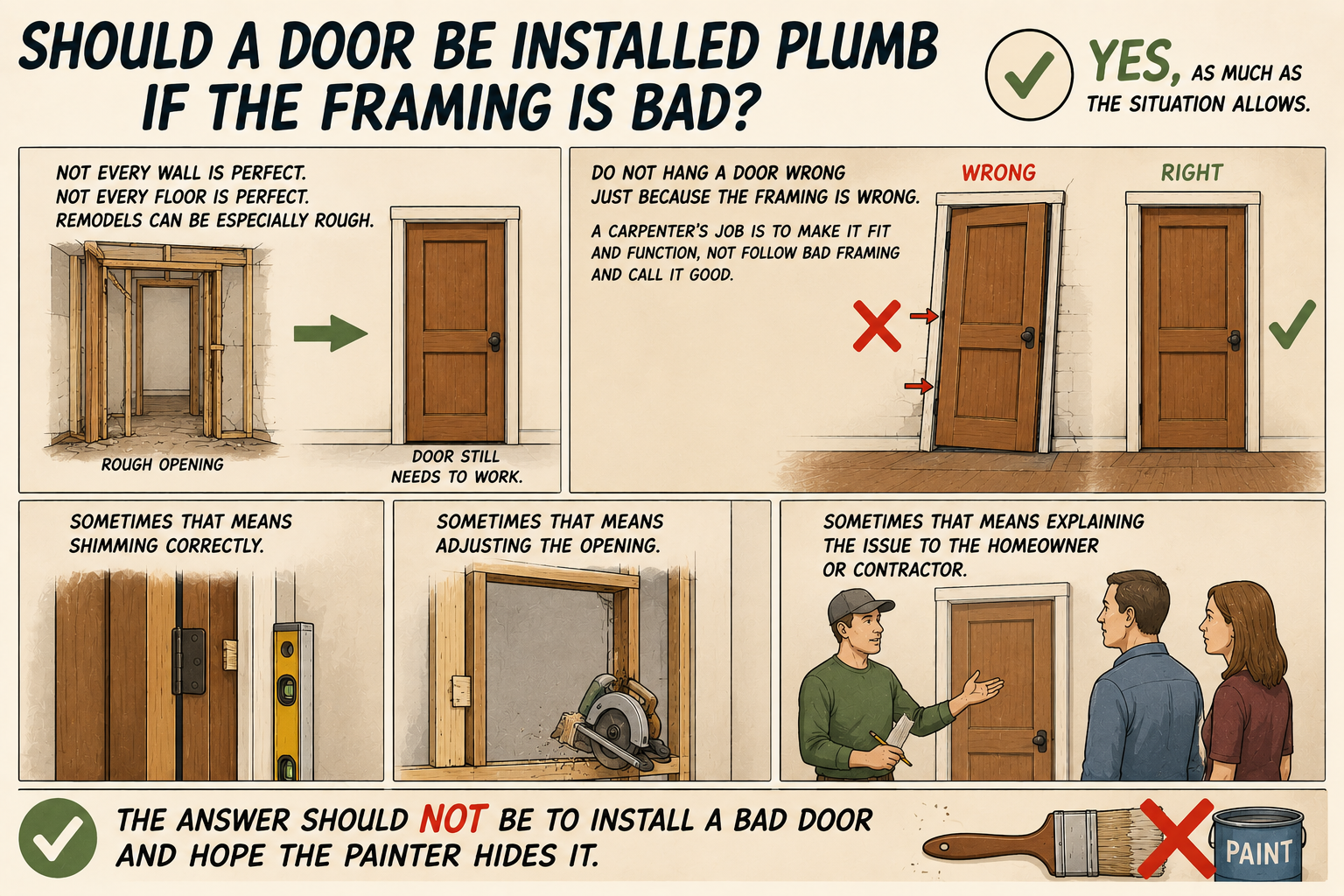
Should a door be installed plumb if the framing is bad?
Yes, as much as the situation allows.
There are always real-world conditions. Not every wall is perfect. Not every floor is perfect. Remodels can be especially rough because you are tying into old framing, old drywall, and old floors.
But the door still needs to work.
I do not like the idea of hanging a door wrong just because the framing is wrong. A carpenter’s job is to make it fit and function, not just follow bad framing and call it good.
Sometimes that means shimming correctly. Sometimes that means adjusting the opening. Sometimes that means explaining to the homeowner or contractor that the framing is causing the issue.
But the answer should not be to install a bad door and hope the painter hides it.
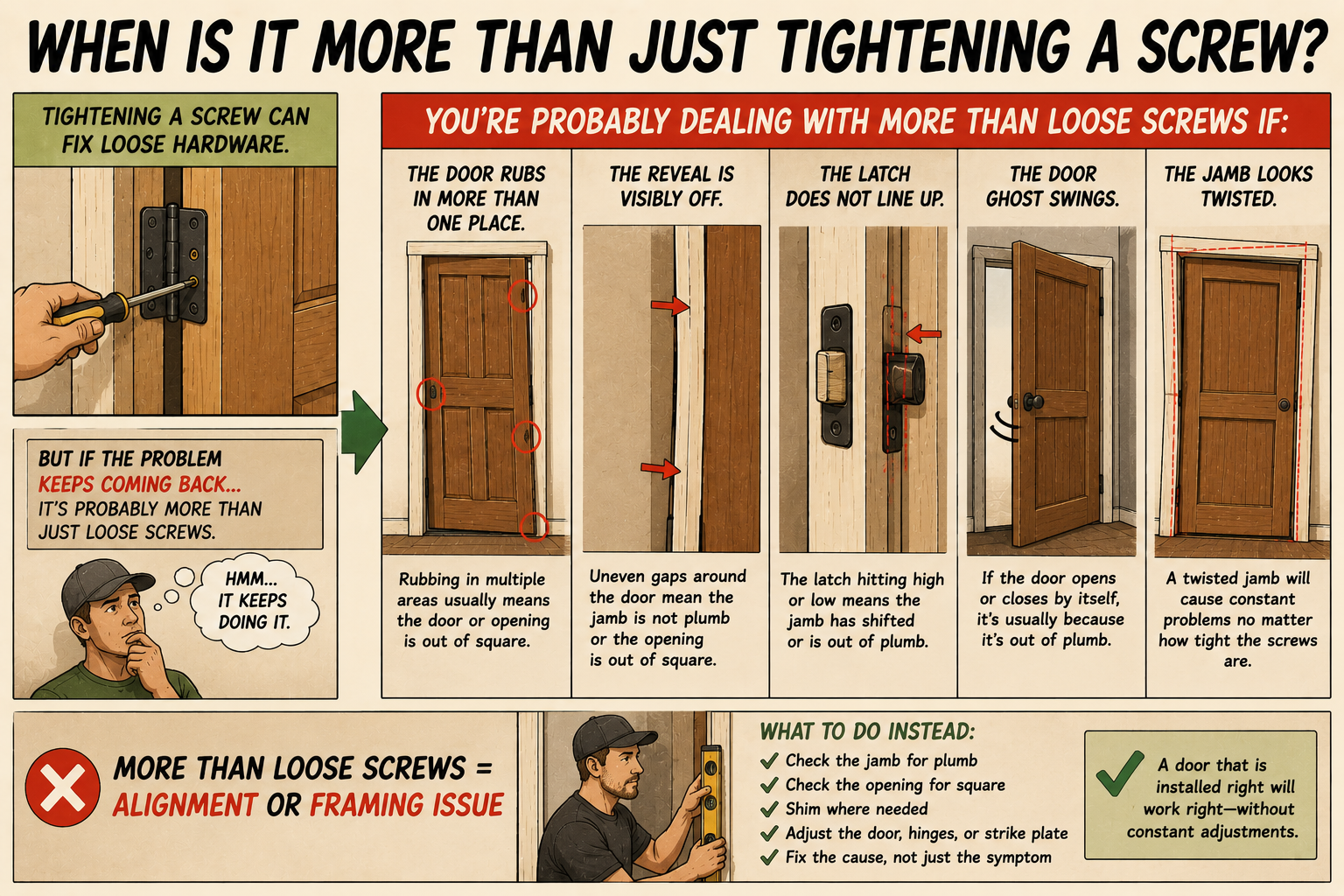
When is it more than just tightening a screw?
It is more than just tightening a screw when the problem keeps coming back.
If the door rubs in more than one place, the reveal is visibly off, the latch does not line up, the door ghost swings, or the jamb looks twisted, you are probably dealing with more than loose screws.
It may need a real adjustment.
That could mean resetting hinges, correcting stripped screw holes, adjusting the jamb, pulling casing, trimming the slab, fixing floor clearance, or rehanging the door.
That is where a finish carpenter can help.
A good carpenter is looking at the door, jamb, casing, framing, floor, hardware, and reveal together. Not just the one spot where the door is rubbing.
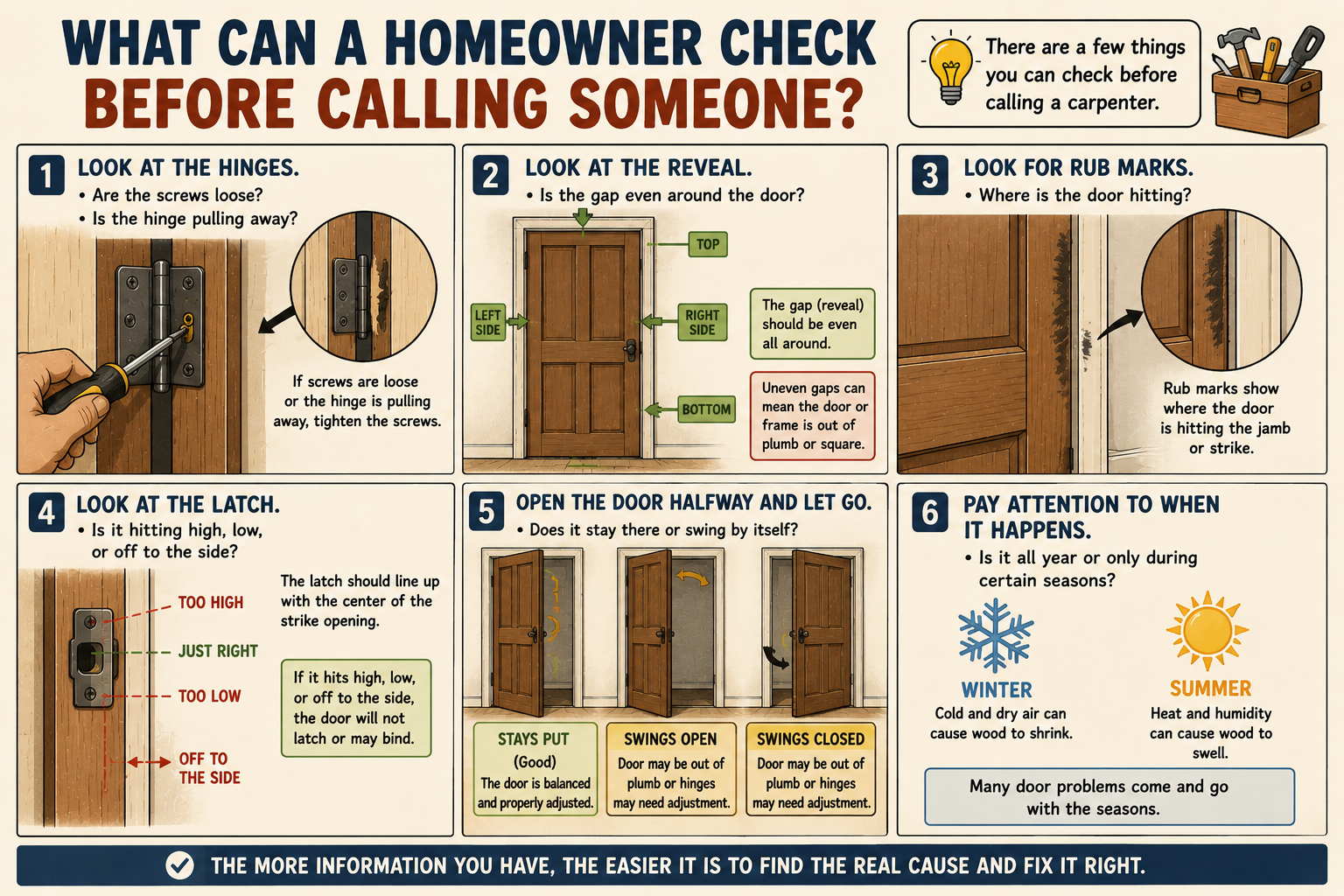
What can a homeowner check before calling someone?
There are a few things you can check before calling a carpenter.
Look at the hinges. Are the screws loose? Is the hinge pulling away?
Look at the reveal. Is the gap even around the door?
Look for rub marks. Where is the door hitting?
Look at the latch. Is it hitting high, low, or off to the side?
Open the door halfway and let go. Does it stay there or swing by itself?
Pay attention to when it happens. Is it all year or only during certain seasons?
If you reach out to someone, send a few pictures or a short video. Show the whole door, the hinge side, the latch side, the top gap, and what happens when you try to close it.
That helps a lot more than just saying, “My door won’t close.”
What should you avoid doing?
Do not keep slamming it.
Do not start cutting the door right away.
Do not move the strike plate over and over without asking why it stopped lining up.
Do not bury the issue in caulk or paint.
Do not assume the door slab is the problem just because that is the part you see moving.
A door that will not close is usually giving you clues. The goal is to read those clues before forcing a fix.
When should you call a carpenter?
Call a carpenter when tightening the screws does not fix it, the door keeps rubbing, the reveal looks wrong, or the door swings by itself.
Also call someone if the problem started after new flooring, remodeling, trim work, or settling. Those situations usually involve more than just the hinge screws.
A finish carpenter can adjust the door, casing, jamb, and opening correctly so the door does not just close, but works the way it should.
That is the difference.
Final thought
A door that will not close all the way might be simple. It might be loose screws. It might be a hinge adjustment.
But it can also be a sign of something bigger, like a shifted jamb, poor install, house movement, swelling, bad reveals, or framing that was never right.
The important part is not guessing.
Good carpentry is about fit, function, and finish. A door should not have to be slammed, lifted, shoved, or fought every time you use it.
If it does, there is a reason.
Find the reason, then fix it right.